Rapid mitigation and extraction
We prioritize getting water out first with commercial extraction so drying equipment can actually do its job. Less time with standing water usually means less material removal.
Serving Naperville, Illinois & surrounding areas
One call instead of ten No web forms, no callback spam 24/7 Emergency Response
Water Damage Restoration in Naperville, Illinois
Rapid response for leaks and flooding, with a clear drying plan, careful documentation, and restoration work that gets your property back to normal.
✓ Skip the 3-hour Google rabbit hole — we’ve already done the vetting
✓ One conversation, not ten voicemails and seven web forms
✓ 24/7 emergency response — talk to a real person who actually knows Naperville Damage
A real person answers - 24/7 Emergency Response
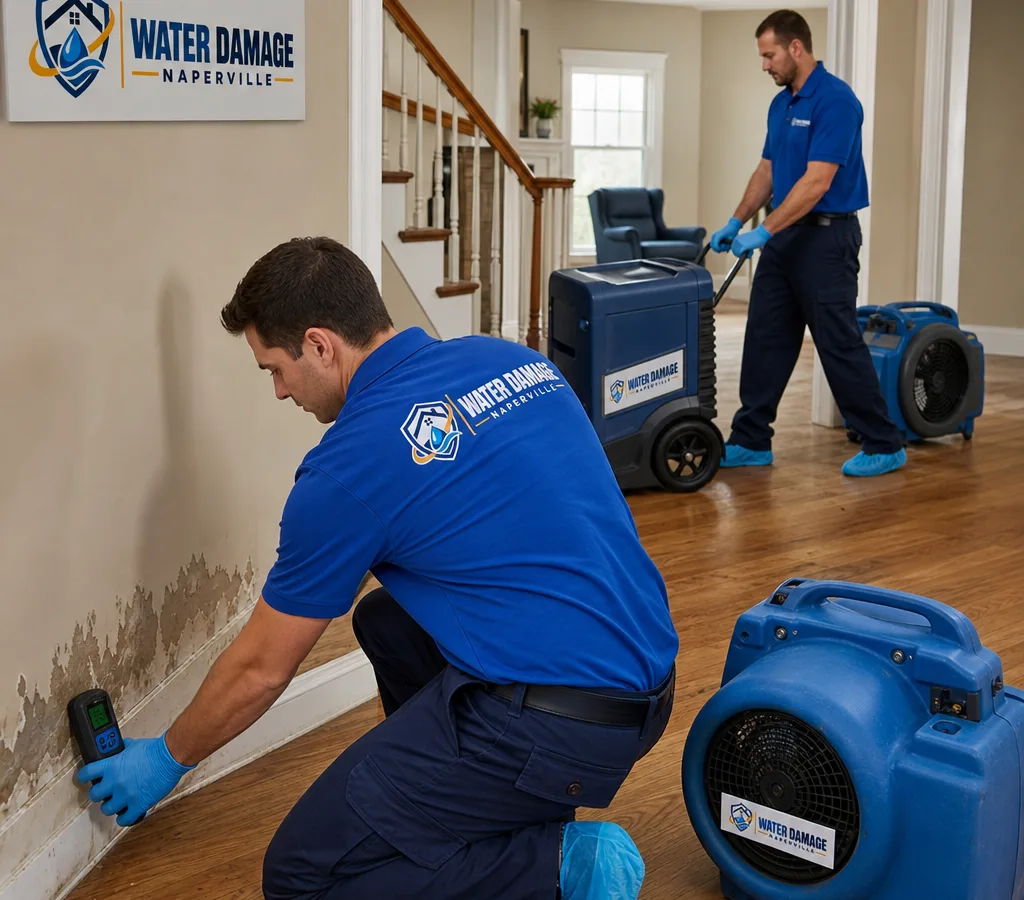
Extract, dry, and verify
When water gets into drywall, flooring, or cabinets, time matters. Our team at Water Damage Naperville provides water damage restoration Naperville homeowners and property managers can rely on for immediate mitigation, careful drying, and a straightforward scope of work.
We focus on the parts that prevent bigger problems later: stopping the water source when it is safe to do so, extracting standing water, removing wet materials that cannot be saved, and drying the structure back to a verified target. You will get a clear plan for what happens next, what needs to be removed versus dried in place, and what documentation is being collected along the way.
Naperville properties vary from newer construction to older homes with finished basements and complex trim details. Water can travel behind baseboards, under floating floors, and through wall cavities. The job is not finished when things look dry. It is finished when moisture levels show the structure is dry enough to rebuild.
A clear path from loss to recovery
We prioritize getting water out first with commercial extraction so drying equipment can actually do its job. Less time with standing water usually means less material removal.
We check moisture in drywall, framing, and subfloors with professional meters and track readings so drying is based on data, not guesswork.
When demolition is needed, we isolate the work area, remove unsalvageable wet materials, and keep debris controlled so the rest of the home stays livable when possible.
We document the affected areas and drying progress so you have the records typically requested during an insurance claim, including photos and equipment logs.
We explain what can realistically be dried in place versus what should be removed, and we outline the steps needed before any rebuild begins.
Source-first stabilization
Most restoration calls start with one of these: supply line leaks, overflowing fixtures, appliance failures, sump pump issues, or stormwater finding a path into a basement or crawl space. The first priority is always safety and stopping the flow. If power is at risk near wet materials, we treat it as a hazard until the area is verified safe.
Next comes extraction and stabilization. We remove standing water, pull wet contents when needed, and set drying equipment based on the category of water and how far it traveled. Clean water from a broken line is handled differently than contaminated water. In any case, we work to keep affected materials from wicking moisture farther.
For water damage restoration Naperville IL properties often need special attention to finished basements, built-in cabinetry, and multi-layer flooring systems. Water can hide under LVP, behind toe-kicks, and beneath underlayment. We inspect those assemblies and recommend removal only where drying will not be reliable.
If you are dealing with wet carpets, damaged drywall, or musty conditions, the safest path is a professional inspection before you start ripping things out. The goal is to dry the structure correctly so repairs hold up and odors do not return.
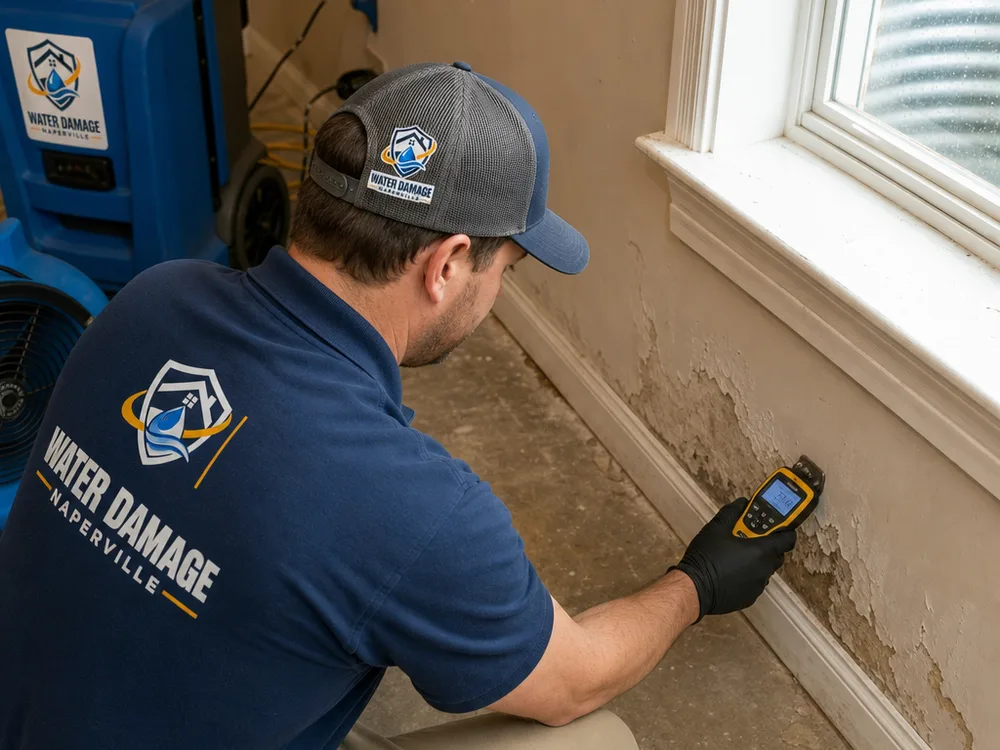
We identify the source and the affected materials, then map moisture so we know where water traveled, including behind baseboards and inside wall cavities when needed.
We remove standing water and take out materials that cannot be dried safely, such as swollen particleboard, saturated insulation, or contaminated porous materials.
We set air movers and dehumidifiers to create the right airflow and humidity control, then adjust as conditions change. Drying is monitored with regular readings.
When appropriate, we clean surfaces, address odors, and recommend practical prevention steps such as drain line maintenance, appliance supply line upgrades, or improved sump monitoring.
Once targets are met and materials are dry, we outline the repair scope. If mold is present or suspected, that requires a separate plan and can change what gets removed.
Pricing follows the verified scope
Water damage restoration in Naperville typically ranges from about $900 to $6,500+, depending on how much water is present, how far it spread, and whether materials like drywall, insulation, or flooring must be removed. Smaller projects, such as a localized leak with limited drying, often sit at the low end, while basement flooding, multiple rooms, or contaminated water pushes costs higher.
Final pricing depends on the affected square footage, equipment days for dehumidifiers and air movers, access, contents handling, and any rebuild items required after drying. The exact cost is confirmed after an on-site inspection and moisture mapping so the scope matches what is actually wet.
Homeowner experiences
“A supply line leak soaked our kitchen floor overnight. They showed up quickly, explained what had to come out and what could be dried, and kept us updated with moisture readings until it was ready for repairs.”
“We had water in the basement after heavy rain. The team was careful about containment and documented everything for our claim. The house stopped smelling damp once the drying was complete.”
“The best part was the communication. We always knew what the next step was and what the timeline depended on.”
Answers for the first critical days
Response timing depends on current demand and the severity of the loss, but mitigation is treated as time-sensitive because extraction and drying are most effective early. When you reach out, we will triage the situation—the source, category of water, amount, and rooms affected—and give you the fastest realistic arrival window.
If it is safe, stop the water source and avoid wet electrical areas, then move small valuables and rugs out of the affected zone. Do not run household fans into wall cavities or under floors without a plan, because that can move moisture to dry areas or spread contaminants. We will guide you on what is safe to do based on your specific situation.
Some drywall can be dried in place if it is not heavily saturated and the water is clean, but wet insulation typically loses performance and often needs removal. The deciding factors are the category of water, how long materials were wet, and moisture readings at multiple points, not just how the surface feels.
Drying commonly takes 3 to 5 days for many residential losses, but it can be shorter for a small clean-water leak or longer if water reached subfloors, multiple rooms, or a basement with limited airflow. We track progress with moisture readings and adjust equipment placement as conditions change.
Yes. We provide the photos, readings, and scope documentation that insurers typically request, and we can coordinate around claim timelines and adjuster questions. Coverage depends on your policy and the cause of loss, so we focus on clear documentation of what happened and what work is required to restore the property.
Often it is, especially when the affected area is contained and drying equipment is set up safely, but it depends on the extent of demolition, whether there is contaminated water, and whether humidity and odors can be controlled. We will tell you plainly if a room should be off-limits or if temporary relocation is the safer option.
Mitigation is the emergency phase: stop the damage from spreading, extract water, remove unsalvageable materials, and dry the structure. Restoration is the repair phase after drying: replacing drywall, flooring, trim, and other finishes so the space is usable again. Some projects include both, while others stop after drying so a separate contractor can handle repairs.
Start the recovery plan
Tell us what happened and what areas are affected, and we will lay out the next steps, the drying plan, and a written scope you can use to make decisions quickly.