
Basement moisture and seepage
Foundation walls, window wells, and finished basement framing can stay damp after heavy rains or minor seepage, especially when storage blocks airflow against exterior walls.
Serving Naperville, Illinois & surrounding areas
One call instead of ten No web forms, no callback spam 24/7 Emergency Response
Mold Inspection in Naperville, Illinois
If you have a musty odor, recent moisture, or unexplained allergy symptoms indoors, a professional inspection can confirm whether mold is present, where it's coming from, and what to do next. Water Damage Naperville provides clear findings and fast reporting for homes and small commercial spaces in Naperville, IL.
✓ Skip the 3-hour Google rabbit hole — we’ve already done the vetting
✓ One conversation, not ten voicemails and seven web forms
✓ 24/7 emergency response — talk to a real person who actually knows Naperville Damage
A real person answers - 24/7 Emergency Response
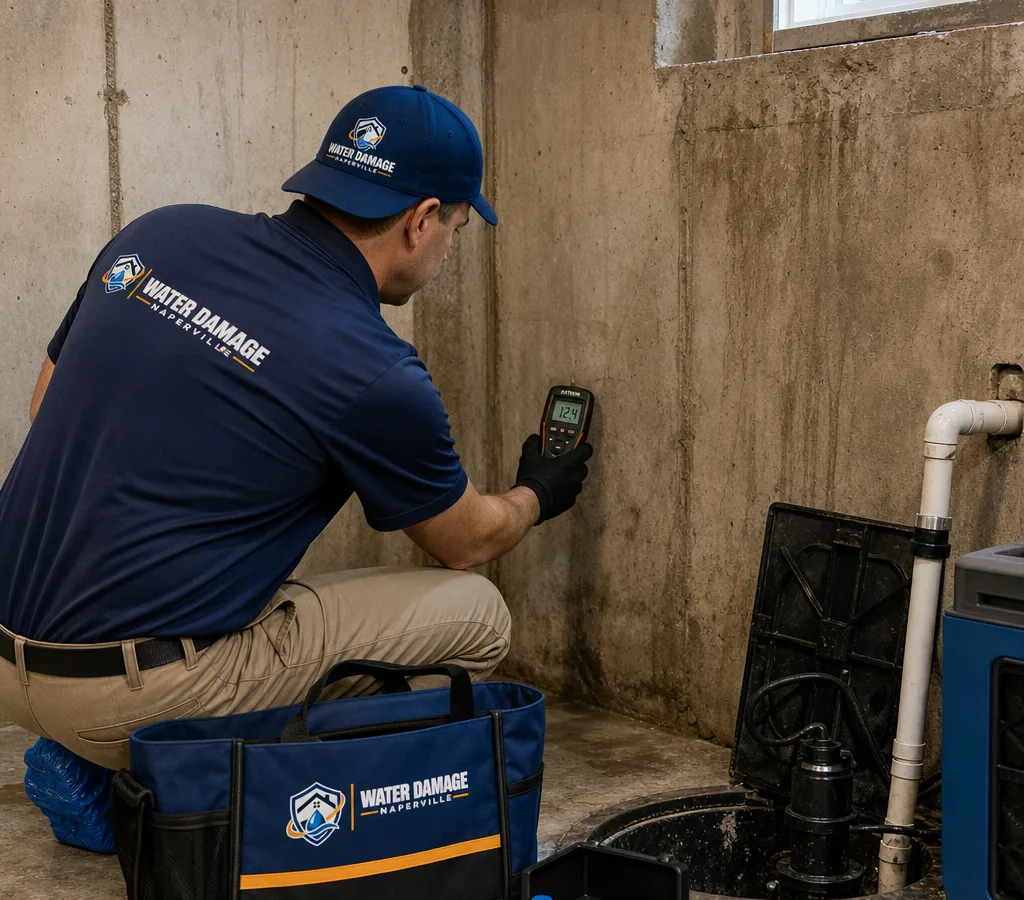
Find the moisture, understand the risk
A Naperville mold inspection is an investigation into conditions that allow mold to grow, plus the visible and hidden signs that it already has. In practice, that means two things: identifying moisture sources—the cause—and documenting microbial growth indicators—the effect.
In Naperville, we commonly see concerns after basement seepage, a backed-up sump pit, roof or flashing leaks, ice-dam related attic moisture, plumbing failures under sinks, and poorly vented bathrooms that stay damp. Mold can start growing on building materials when moisture persists, and it often shows up first where air doesn't circulate well: behind stored items, inside closets on exterior walls, around window frames, and in crawlspaces.
During a mold inspection in Naperville, our goal is to give you decision-grade information. You should leave with a clear answer on whether the conditions support mold growth, what areas are suspect, what testing—if any—is appropriate, and what the next step should be if growth is found.
A structured, moisture-focused walkthrough
A thorough mold inspection Naperville, IL homeowners can rely on starts with a structured walkthrough and a moisture-focused approach.
We typically:
Because Naperville homes range from older construction with finished basements to newer builds with tighter building envelopes, we focus on how the house handles airflow and moisture in real life, not just what looks suspicious at first glance.
Local moisture patterns
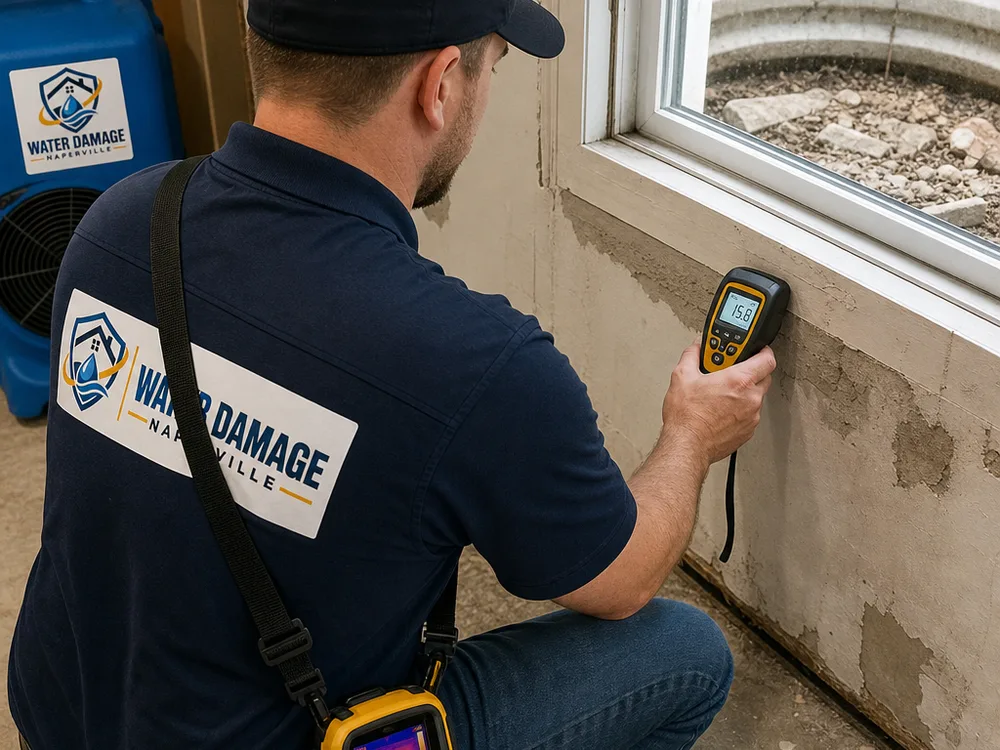
Foundation walls, window wells, and finished basement framing can stay damp after heavy rains or minor seepage, especially when storage blocks airflow against exterior walls.
Showers and tubs create a lot of moisture. If the exhaust fan is undersized, ducted improperly, or rarely used long enough, moisture lingers on drywall, paint, and caulk lines.
Small leaks around vents or flashing, plus poor ventilation, can lead to moisture on sheathing and rafters. The attic can smell musty even when living areas seem fine.
Slow leaks under sinks, behind toilets, around dishwashers, or near washing machines can wet subfloors and wall plates for weeks before anyone notices.
Condensate line backups, wet coils, or poorly sealed ductwork can create damp spots around air handlers. Mold can also grow on dust when humidity stays high.
Evidence before action
We gather basic details about the property, the areas of concern, and any known water events so the inspection time is spent in the right places.
We walk the space, check likely moisture pathways, and use non-destructive tools to pinpoint elevated moisture. We also note ventilation and airflow problems that allow humidity to persist.
If testing is appropriate, we collect air and/or surface samples with proper controls and documentation so results are interpretable and tied to specific locations.
You get a straightforward summary of what was observed, what areas are suspect, and how moisture is getting in or building up. Photos and measurement notes are included when helpful.
If mold is confirmed or strongly suspected, we outline practical next steps: what to fix first—the moisture source—what areas may need professional remediation, and how to prevent recurrence.
Scope determines inspection cost
Most mold inspections in Naperville typically range from $250 to $650, depending on home size, number of areas checked, and whether sampling is needed. A targeted inspection for one concern area is often at the lower end, while larger homes, finished basements, multiple suspect rooms, or testing and lab fees can push costs higher.
Price is mainly driven by square footage, access to attics or crawlspaces, how many locations need moisture mapping, and how much documentation you want for a real estate or landlord situation. The exact cost is confirmed after we understand the scope and the areas you want evaluated.
Clear findings for property decisions
“We had a musty smell in the basement after a heavy rain. The inspection explained where the moisture was getting in and which wall area was actually affected. The report made it easy to decide what to fix first.”
“We were in a real estate timeline and needed answers fast. The inspector was thorough, took photos, and didn't push unnecessary testing. The summary was clear enough to share with our agent and contractor.”
What to know before scheduling
Schedule an inspection when you notice persistent musty odors, see staining that returns after cleaning, have had a leak or overflow, or experience symptoms that improve when you leave the building. In Naperville, we also recommend inspection after basement seepage or a sump issue, since damp framing and drywall can support growth even when surfaces dry out.
No. Sampling is used when it will change the decision, such as confirming what type of growth is present, comparing an area of concern to a control area, or documenting conditions for a transaction or dispute. If visible growth and moisture measurements already explain the problem clearly, we may recommend focusing on fixing the moisture source and addressing affected materials instead of paying for extra tests.
Most on-site inspections take about 60 to 120 minutes depending on the size of the home and how many areas need to be checked. If lab testing is performed, results commonly take a few business days; without testing, you can usually expect findings and next steps shortly after the visit in a written format.
We can often identify likely hidden mold by finding elevated moisture, thermal anomalies, and odor patterns, then correlating them to building details like exterior walls, plumbing runs, or window openings. A mold inspection can narrow the problem to specific sections so any opening-up is limited and purposeful, but confirming growth inside a sealed cavity sometimes requires a small, controlled access point.
Leave suspected areas accessible, move items away from basement exterior walls if possible, and avoid heavy cleaning with bleach right before the visit because it can mask visual clues. If you run dehumidifiers, keep them at your normal setting; changing conditions drastically right before inspection can make it harder to understand what the house is doing day to day.
Yes. A documented mold inspection can help buyers and sellers move from suspicion to facts, especially when a home has a finished basement, prior water history, or visible staining that needs a clear explanation. The most useful reports tie observations to moisture sources and outline reasonable next steps rather than just listing lab numbers.
Inspect first, act with confidence
Tell us what you're noticing and where. We'll recommend the right scope, perform a professional inspection, and provide a written report you can use to plan repairs or remediation with confidence.