
Containment and negative air
We isolate the affected area with plastic sheeting and use HEPA-filtered negative air to reduce cross-contamination into hallways, HVAC returns, and adjacent rooms.
Serving Naperville, Illinois & surrounding areas
One call instead of ten No web forms, no callback spam 24/7 Emergency Response
Mold Removal in Naperville, Illinois
If you smell a musty odor, see staining, or have had a recent leak, quick containment matters. Our team isolates the affected area, removes contaminated materials safely, and restores the space with a clear scope before work starts.
✓ Skip the 3-hour Google rabbit hole — we’ve already done the vetting
✓ One conversation, not ten voicemails and seven web forms
✓ 24/7 emergency response — talk to a real person who actually knows Naperville Damage
A real person answers - 24/7 Emergency Response
Contain, remove, and dry
Searching for mold removal Naperville IL usually means you need two things at once: a crew that can move quickly and a plan that keeps spores from spreading through the rest of the property. Mold problems often start after a roof or window leak, a basement seepage event, a plumbing issue under a sink, or condensation in an under-ventilated bathroom or laundry area. Once moisture is present, mold can grow on drywall paper, wood framing, insulation, carpet backing, and dust.
Water Damage Naperville handles Naperville mold removal with a safety-first approach. We focus on containment, source control, and proper removal methods that match the material and the level of growth, rather than spraying a single chemical and hoping for the best. You get straightforward communication about what we can clean, what needs to be removed, and what has to dry before rebuilding.
Naperville properties vary widely, from older homes with finished basements to newer construction with tight building envelopes. That matters because basements, crawlspaces, and attic areas can hold humidity or conceal slow leaks for a long time. The goal is the same in every case: stop the moisture, remove the contamination, and leave the space dry and stable so the problem does not return.
Safety-first cleanup
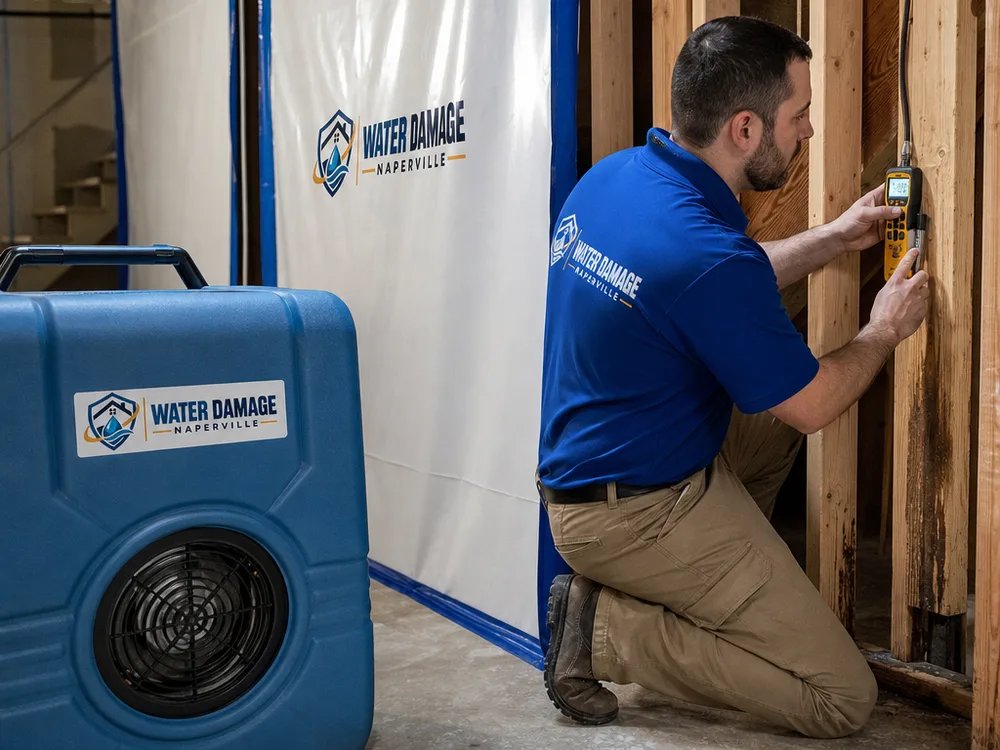
We isolate the affected area with plastic sheeting and use HEPA-filtered negative air to reduce cross-contamination into hallways, HVAC returns, and adjacent rooms.
Air scrubbing and HEPA vacuuming target airborne spores and settled dust. Surfaces are cleaned using methods appropriate to the material, not a one-size approach.
When drywall, insulation, carpet padding, or other porous materials are contaminated, removal is often the safest option. We document what is removed and why.
Drying is only complete when materials read dry with professional moisture tools. Mold cleanup without confirming dryness invites repeat growth.
You get a written plan that explains the work area, the safety setup, and what restoration steps come next once the space is clean and dry.
Source-focused treatment
Most mold projects come down to three decisions: how far the growth extends, what materials are affected, and what is feeding the moisture. We start by identifying the likely moisture source—for example, a slow plumbing leak, a damp basement wall, or condensation from poor ventilation. Then we set containment before disturbing any materials.
For non-porous and semi-porous surfaces that can be cleaned, we use physical removal—scrubbing, wiping, and HEPA vacuuming—combined with appropriate antimicrobial products. For porous materials that cannot be reliably cleaned, we remove and dispose of them properly. In tight spots like under stairs, behind vanities, or within soffits, we open the area carefully so the full extent is visible and treat what is actually there.
If the mold issue started with a water event, getting the structure dry is part of the fix. Many clients begin with our water damage service when the leak or flood is still active, then transition into mold cleanup once the area is stabilized. Either way, you should expect us to explain what we found, what is being removed, how we are keeping the rest of the property protected, and what conditions must be met before the area is closed back up.
Controlled from start to finish
We assess visible growth, odors, and moisture conditions and outline the work zone, access points, and protection needed for occupied spaces.
We seal the area, protect flooring and pathways, and set HEPA negative air when appropriate so spores are controlled during removal.
Contaminated porous materials are removed; remaining framing and surfaces are cleaned with HEPA vacuuming and appropriate scrubbing methods.
We address damp materials with drying equipment as needed and verify progress with moisture measurements, not guesswork.
We perform a detailed final clean of the work zone and review what is ready for rebuild, paint, flooring, or other repairs.
Clear pricing starts with scope
Most mold removal in Naperville typically ranges from about $900 to $3,500 for a contained, small to mid-size area, while larger multi-room or basement projects can run $4,000 to $12,000+ depending on demolition and drying needs. A small bathroom or under-sink cleanup is usually at the low end; extensive drywall removal, insulation replacement, and HVAC-related containment raise the cost.
Final pricing depends on the square footage affected, how hidden the growth is—behind walls or under flooring—what materials must be removed, access, and whether drying equipment is required. The exact cost is confirmed after an on-site inspection and a written scope.
Homeowner experiences
“We found mold behind the baseboards after a slow leak. The crew sealed off the room, explained what had to come out, and kept the rest of the house clean. The smell was gone after the cleanup and drying.”
“Our basement had a musty odor that kept coming back. They located damp materials, removed what couldn't be saved, and showed us the moisture readings before closing it up.”
Clear answers before work begins
Most projects can start as soon as an on-site inspection confirms the scope and containment plan. Timing depends on how urgent the moisture issue is and whether the area is occupied, since setting containment and protection is part of starting safely.
Some mold can be cleaned when it is on non-porous or semi-porous surfaces and the material is structurally sound, but contaminated porous materials like drywall, insulation, and carpet padding often need to be removed. The decision is based on material type and how deep the growth has penetrated, not just what is visible.
Often yes for smaller, well-contained areas, but it depends on the location of the work zone, occupant sensitivity, and whether containment can keep traffic paths and HVAC returns protected. During the inspection we can recommend practical precautions, like keeping doors closed, adjusting HVAC usage, and limiting access near the work area.
Bleach may discolor surface staining, but it does not reliably solve mold on porous materials and it does not fix the moisture that caused the growth. Proper mold remediation focuses on physical removal or cleaning methods matched to the surface, plus drying and moisture control.
Yes. If the mold is tied to a recent water event, the sequence matters: stop the water source, dry the structure, then remove and clean affected materials under containment. If the water issue is still active, starting with stabilization and drying usually prevents the mold problem from expanding.
If it is safe, avoid disturbing the area and avoid running fans that could move spores into other rooms. Clear a path to the affected space, keep pets and children away from the area, and note any recent leaks, odors, or past repairs so we can focus the inspection quickly.
If you suspect mold, the fastest way to control the situation is an on-site assessment with a written scope, containment plan, and clear next steps for cleanup and restoration.
Call for Emergency HelpStart with a clear inspection
Tell us what you are seeing and where it is showing up. We will schedule an inspection, explain what needs to happen in what order, and provide clear pricing before work begins.