
Basements after seepage or dampness
Naperville basements can swing between dry and damp depending on weather and drainage. We test the air and inspect rim joists, finished wall cavities, and stored items where growth can hide.
Serving Naperville, Illinois & surrounding areas
One call instead of ten No web forms, no callback spam 24/7 Emergency Response
Mold Testing in Naperville, Illinois
If you smell something musty, see staining, or have allergy-like symptoms that flare up indoors, a targeted inspection and lab analysis can tell you what is present and what to do next. Our team delivers clear, written results and practical next steps for homes and small commercial spaces across Naperville.
✓ Skip the 3-hour Google rabbit hole — we’ve already done the vetting
✓ One conversation, not ten voicemails and seven web forms
✓ 24/7 emergency response — talk to a real person who actually knows Naperville Damage
A real person answers - 24/7 Emergency Response
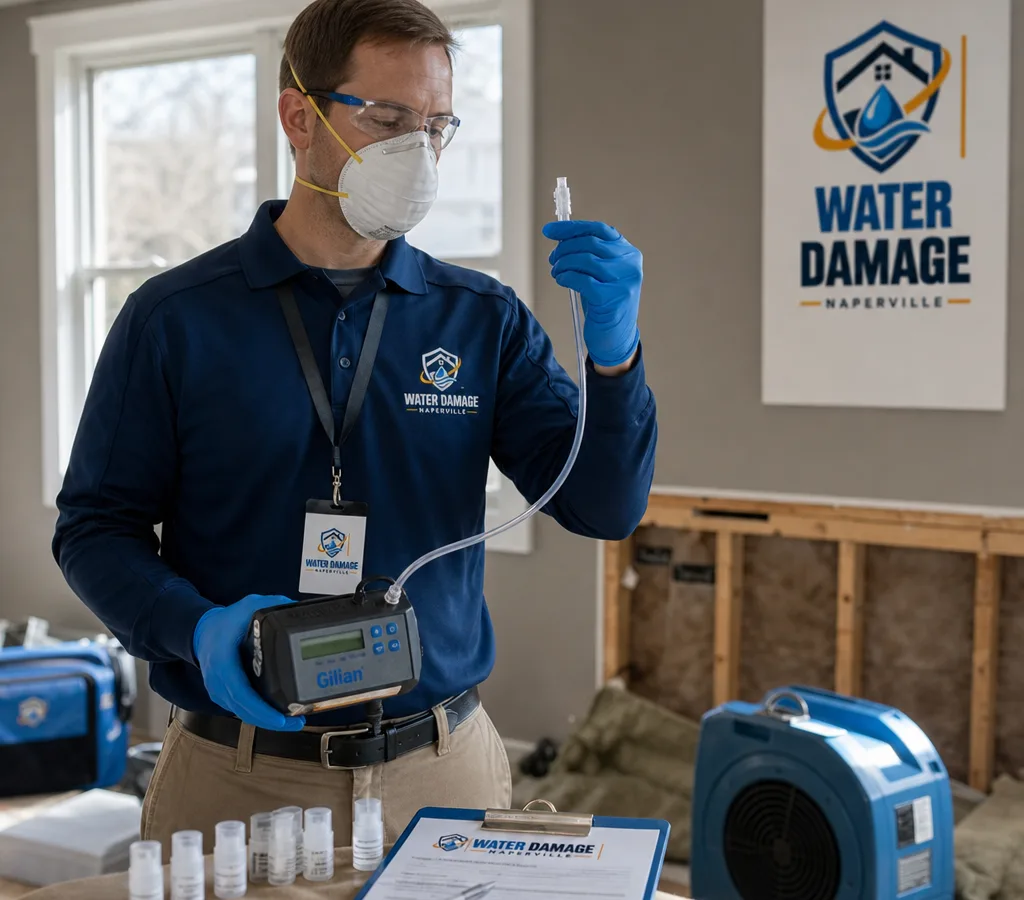
Test when the answer changes the plan
Mold testing in Naperville is most useful when you need information you can act on: what areas are affected, what type of mold is likely present, and whether indoor air is elevated compared to a baseline. It is also helpful when you need documentation for a landlord, tenant, buyer, seller, or property manager.
Testing may be the right move if:
Testing is usually not the first step if visible mold growth is already obvious on porous materials such as drywall or insulation. In that case, the priority is a moisture source check and a plan to remove or contain affected building materials safely. We can still test, but we will explain what the result will and will not change before you spend money on lab work.
Inspection-guided sampling
A good test starts with a good inspection. Our mold testing Naperville process combines a room-by-room assessment with sampling that fits what we see.
Typical scope includes:
You receive a written summary explaining what was sampled, what the lab found, what it means in plain language, and which next steps make sense for your property.
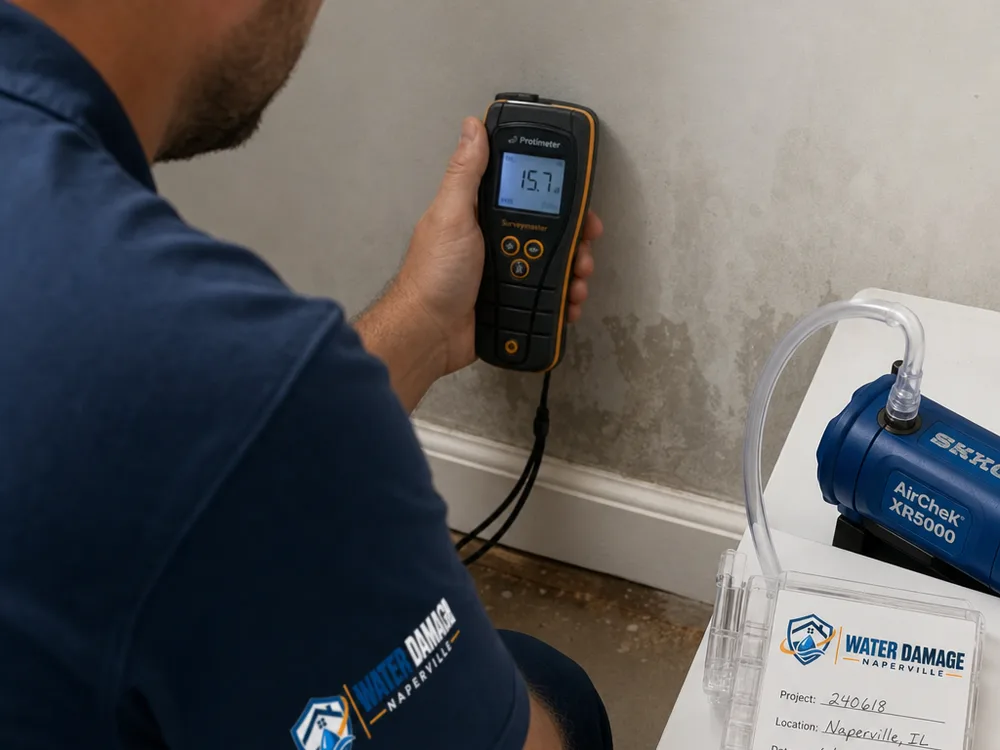
Targeted to the property
Naperville basements can swing between dry and damp depending on weather and drainage. We test the air and inspect rim joists, finished wall cavities, and stored items where growth can hide.
Intermittent humidity and small plumbing leaks often show up as staining at ceiling corners, vanity backs, or around exhaust fan housings. Surface sampling can help confirm what you are seeing.
Condensation can develop when insulation, air sealing, and ventilation are out of balance. We check sheathing and framing for suspect areas and advise on moisture-control steps.
Water can travel before it shows. We trace likely paths, take moisture readings, and sample where elevated moisture or staining suggests hidden impact.
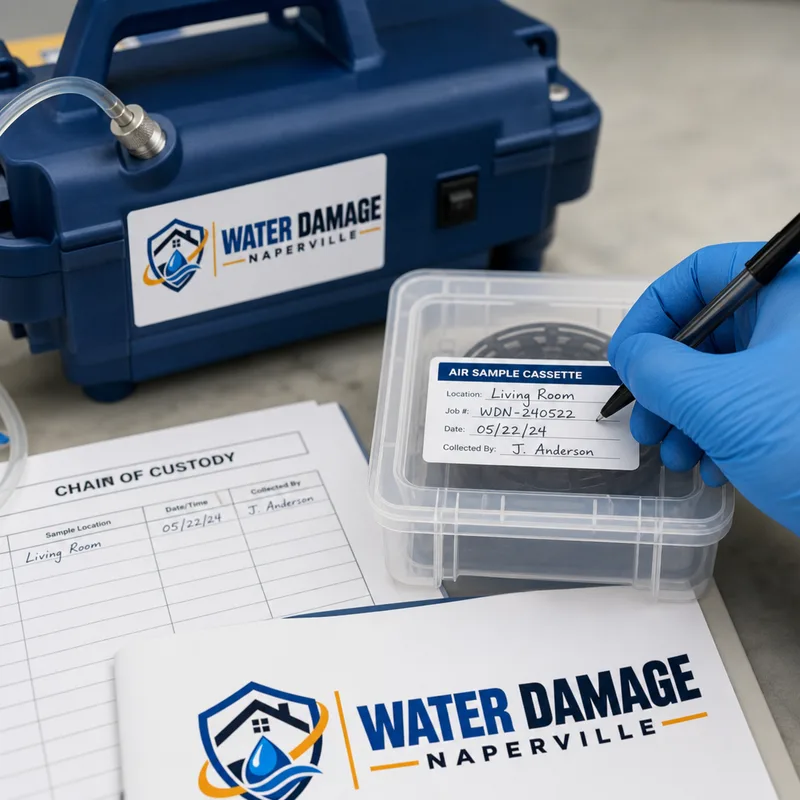
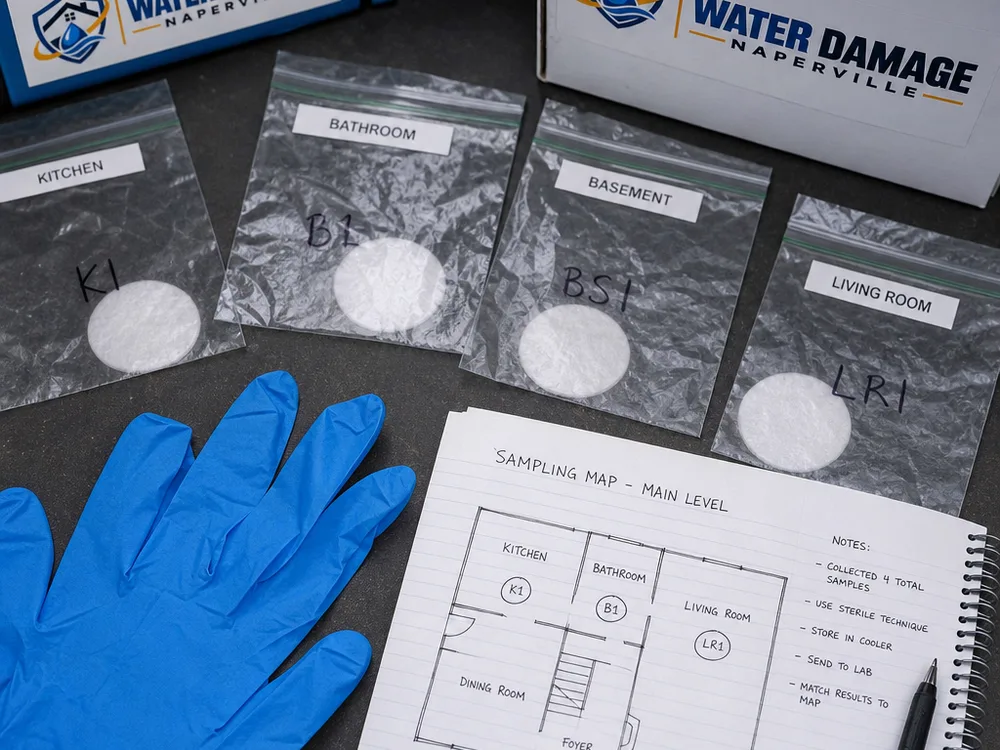
If you need a straightforward report for a transaction, we document findings clearly, including sample locations and lab results, so decisions are not based on guesswork.
We start by clarifying what you need to know: confirm a suspected issue, compare indoor air to an outdoor baseline, or document conditions for a transaction or tenant file.
We inspect suspect rooms and building transitions such as foundation-to-framing connections, plumbing penetrations, and exterior wall corners. Moisture readings guide where sampling makes sense.
Air and/or surface samples are collected and labeled by location. When appropriate, we include an outdoor baseline sample for context.
Samples are sent for analysis and reported by type and concentration where applicable. We translate the lab report into a clear summary of what it likely means for your space.
If results indicate a problem, we outline practical next steps such as targeted removal or containment, material-appropriate cleaning, and fixing the moisture source to help prevent recurrence.
Pricing follows the sampling plan
Mold testing in Naperville typically ranges from about $275 to $750 for most homes, depending on inspection time and how many samples are needed. A basic check with one to two air samples is usually at the lower end, while larger homes, multiple suspect areas, or combined air and surface sampling can push pricing higher.
Final cost depends on square footage, access to attics or crawlspaces, the number of rooms to compare, how many lab samples are collected, and whether prior water damage makes the inspection more involved. Exact pricing is confirmed after the on-site assessment and an agreed sampling plan.
Local buildings, weather, and moisture
Mold problems are rarely random. In Naperville, we often see patterns tied to the building and the season.
Humidity swings matter. Late spring through early fall can bring higher outdoor humidity, and indoor humidity rises quickly when bathrooms are under-ventilated or basements are not dehumidified. During these periods, we pay close attention to condensation-prone areas like basement rim joists, cold exterior corners, and around HVAC supply runs.
Basements and finished lower levels need careful sampling strategy. A finished basement can trap moisture behind drywall or under flooring. When people only sample the open-area air, results can miss a cavity problem. We pair moisture readings with targeted sampling decisions.
Older and newer housing both have risks, just different ones. Older homes may have more pathways for bulk water intrusion at foundation cracks or aging window assemblies. Newer, tighter homes can hold humidity and need proper ventilation and exhaust. The test plan should match how the building behaves, not a one-size checklist.
If you are dealing with a known water incident and trying to verify conditions, it can help to coordinate testing after the space has been dried and stabilized. Many clients ask for mold testing as a follow-up step so they have a clear record of what was found at the end of the process.
Organized inspection records

Understand the inspection
Scheduling depends on current demand, but we prioritize time-sensitive situations like active odors, real estate deadlines, and post-leak concerns. Once the inspection is complete, lab turnaround is typically measured in days rather than weeks, and we explain your expected timeline before samples are sent.
It depends on the question you are trying to answer. Air sampling helps evaluate what occupants may be breathing and is useful for comparing rooms or checking a finished basement, while surface or tape sampling helps confirm what a visible spot likely is. Many Naperville homes benefit from a combination when there is both a suspect area and a concern about overall indoor air.
Testing can point you toward likely locations, but moisture detection and building inspection are what identify the source. A lab result may indicate an indoor amplification, while moisture readings and visual clues help narrow down whether the driver is a plumbing leak, a window or roof leak, or humidity and condensation.
Yes, in most cases you can stay home during the inspection. We may ask that HVAC settings remain consistent during air sampling and that windows stay closed for a period beforehand, because those factors affect air-sample comparability.
Avoid heavy cleaning, sanding, or disturbing suspect areas right before the visit, because that can change what a surface sample shows. For air sampling, keep windows closed and avoid running air purifiers for a period beforehand if possible. We will confirm simple preparation steps when the appointment is set.
Yes. We provide written documentation that identifies sample locations and summarizes lab results in plain language, with practical next steps. If you need the report formatted for a specific use, tell us up front so we can capture the right details during the inspection.
Inspection, analysis, and next steps
Share what you are noticing and where it is happening. We will recommend a testing approach that fits the situation, then deliver straightforward lab results and a practical plan for what to do next.