
Containment that fits the job
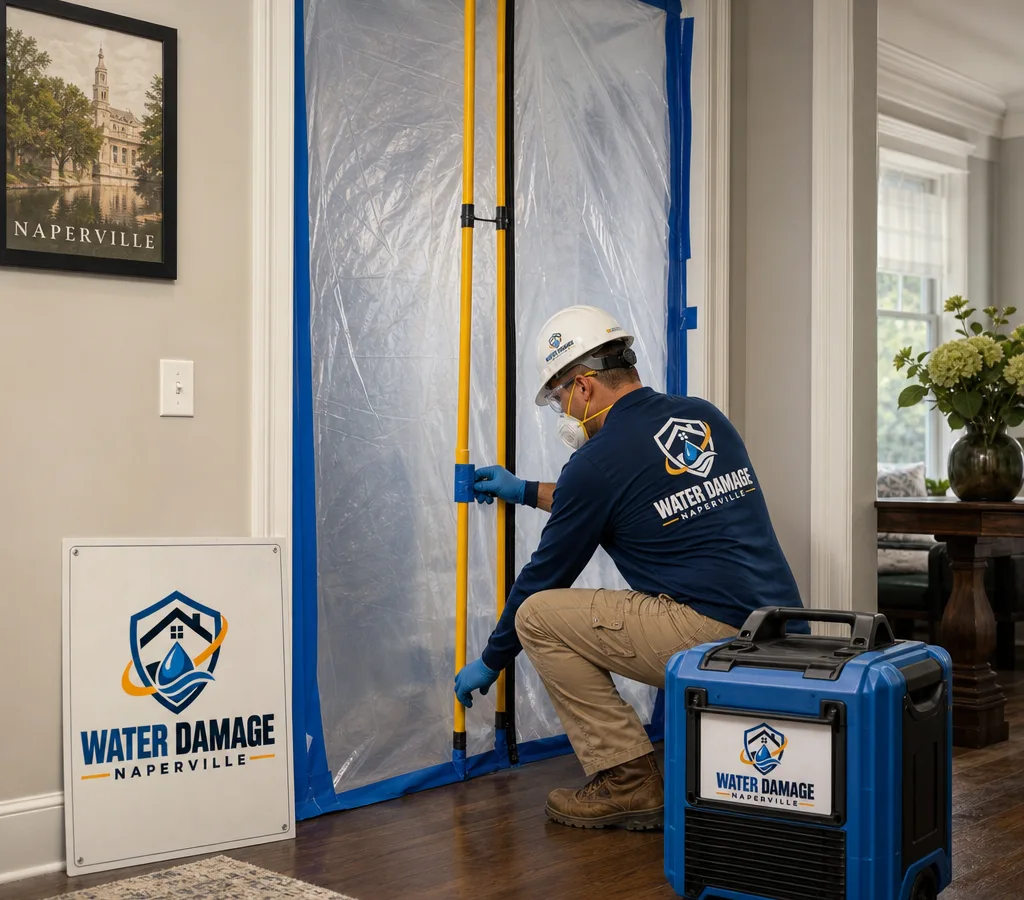
We isolate the work zone with plastic sheeting and controlled entry so spores and dust stay where the cleanup is happening, not in the rest of your home.
Serving Naperville, Illinois & surrounding areas
One call instead of ten No web forms, no callback spam 24/7 Emergency Response
Mold Remediation in Naperville, Illinois
If you smell a musty odor, see staining, or have had a recent leak, mold can spread fast. Our Naperville team inspects, contains the area, removes contaminated materials when needed, and cleans and treats surfaces so the space is safe to use again.
✓ Skip the 3-hour Google rabbit hole — we’ve already done the vetting
✓ One conversation, not ten voicemails and seven web forms
✓ 24/7 emergency response — talk to a real person who actually knows Naperville Damage
A real person answers - 24/7 Emergency Response
Controlled cleanup, clearly defined
Mold remediation is the controlled cleanup of mold growth and mold-affected materials, with the goal of restoring a safe indoor environment and preventing cross-contamination to the rest of the building. It typically includes an on-site assessment, moisture and material checks, setting up containment, HEPA air filtration, removal of unsalvageable porous materials—often drywall, insulation, carpet pad, and some ceiling tiles—detailed cleaning of remaining structural surfaces, and post-clean verification steps.
Remediation is different from simply spraying a chemical and painting over stains. “Mold-resistant” coatings have a place, but they are not a substitute for physically removing growth and fixing the moisture condition that allowed it.
Remediation is also not the same as a full rebuild. If removal opens walls or ceilings, we can leave the area clean and ready for repairs and document what was removed so the rebuild scope is straightforward. If mold followed a plumbing leak, roof issue, or basement seepage event, addressing the water source is part of the plan. Active water intrusion and wet materials should be dried and stabilized before the mold work is finalized.
Local moisture patterns matter
Naperville homes commonly have finished basements, storage rooms, and mechanical areas where humidity can build up and small leaks can go unnoticed. Mold shows up most often around sump pits, rim joists, behind finished wall panels, under carpet near exterior walls, and around HVAC or water-heater condensate lines.
Older and newer construction can both have problems, just for different reasons. In established neighborhoods like Downtown Naperville, some homes have older assemblies where small foundation seepage or aging window wells can introduce moisture. In areas with newer builds such as South Naperville, tight building envelopes and finished lower levels can trap humidity if ventilation and dehumidification are not dialed in. Along the I-88 corridor, commercial and multi-tenant spaces sometimes see mold after overnight HVAC issues or plumbing leaks that spread above ceilings.
The pattern matters because it guides the scope: where containment should be placed, which materials can be cleaned, and what needs to be removed to reach hidden growth.
Protection throughout the work zone
We isolate the work zone with plastic sheeting and controlled entry so spores and dust stay where the cleanup is happening, not in the rest of your home.
Air scrubbers and HEPA filtration reduce airborne particulates during demolition and cleaning and help keep adjacent rooms cleaner during the process.
If drywall, insulation, carpet pad, or other porous materials are moldy, they usually cannot be reliably washed. We remove them to exposed framing when needed.
Remaining wood and masonry surfaces are HEPA vacuumed and cleaned using methods appropriate to the substrate, then dried thoroughly before the area is closed back up.
Remediation lasts when the moisture issue is addressed. We point to the likely cause, such as a leak, condensation, or humidity, and outline practical next steps.
You get a written scope that explains containment locations, what materials are being removed, and what the finished remediation condition looks like.
From inspection to final review
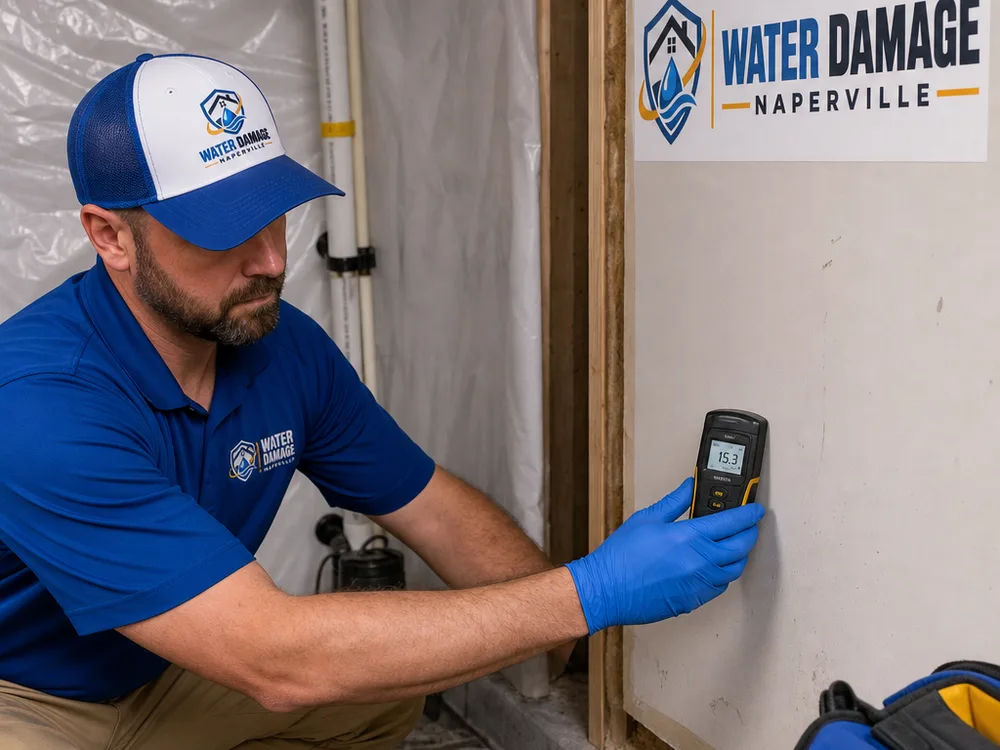
We start by identifying visible growth, odor areas, and likely moisture sources. We check moisture in building materials and look for dampness, condensation, and low airflow.
Before disturbing materials, we define the work zone, protect pathways, and set containment. For certain layouts, negative pressure keeps air moving into the work area rather than out.
We remove contaminated porous materials and bag debris for proper disposal. Controlled demolition is often the only way to reach hidden mold behind finishes.
Exposed framing and structural surfaces are HEPA vacuumed and cleaned. Where appropriate, antimicrobial products are applied according to label directions and material type.
If materials are damp, we dry them using professional equipment and verify moisture levels are trending correctly. Mold work should not be closed up until the space is dry.
We review the area with you, confirm containment can be removed, and explain the repairs, ventilation changes, dehumidification, or leak correction that should happen next.
Pricing follows the confirmed scope
Most mold remediation in Naperville typically ranges from about $1,500 to $6,500, depending on how far the mold spread and how much demolition is required. A small, contained spot in a utility room may fall toward the low end, while a basement with affected drywall, insulation, flooring, and multiple containment zones can run higher.
Your final price mainly depends on the size of the affected area, how much porous material must be removed, access in tight crawlspaces or finished basements, whether HVAC supplies or returns are involved, and what it takes to correct the moisture condition. We confirm the exact scope and cost after an on-site inspection.
Homeowner experiences
“We had a musty smell in the basement and found mold behind the baseboard. The crew set up containment, kept dust down, and explained what had to be removed and why. The basement air feels normal again.”
“After a small plumbing leak, mold showed up behind the finished wall. They mapped moisture, removed the wet materials, and left everything clean and ready for repairs. The written scope made it easy to coordinate the rebuild.”
If you're seeing staining, peeling paint, warped baseboards, or persistent odor, get a professional inspection before the affected area is sealed back up or painted over.
Call for Emergency HelpAnswers before remediation begins
Many residential mold remediation jobs take 1 to 3 days of on-site work, but timelines depend on containment complexity, demolition needs, and drying time. A small utility-room cleanup can be completed quickly, while a finished basement may take longer because materials must be removed, surfaces cleaned, and moisture conditions verified before rebuild begins.
Sometimes, but only when mold is limited to non-porous or semi-porous surfaces and the drywall is dry and structurally sound. If drywall or insulation is moldy or wet, removal is usually required because those materials cannot be reliably cleaned through their full thickness.
Often you can stay home if the work area is well contained and the pathway to it is protected, but it depends on where the mold is and who lives in the home. If the affected area is in a main living space, or anyone has respiratory sensitivity, it may be more comfortable to be out during active demolition and cleaning.
Clear personal items away from the affected area and avoid disturbing visible growth. Moving boxes and textiles out of a basement storage room helps the team set containment and reduces cross-contamination risk. If there was a recent leak, stop the source if possible and avoid running fans directly across moldy surfaces.
Air testing is optional and is usually most useful when baseline documentation is needed or symptoms persist without visible growth. Many projects can be scoped through thorough inspection and moisture mapping, then verified using visual and surface-cleanliness criteria after remediation.
Preventing return comes down to moisture control, not just cleaning. We identify likely causes such as plumbing leaks, condensation, or elevated basement humidity and recommend practical fixes like repairing leaks, improving ventilation, sealing obvious air leaks that drive condensation, or using dehumidification.
Start with an on-site assessment
Tell us what you're seeing and where it's located. Water Damage Naperville will schedule an on-site assessment, explain the scope in plain language, and outline the safest path to clean, dry, usable space.